


Career Insights
Rethinking Everything: Why the Biggest Workplace Challenges Hide the Greatest Possibilities
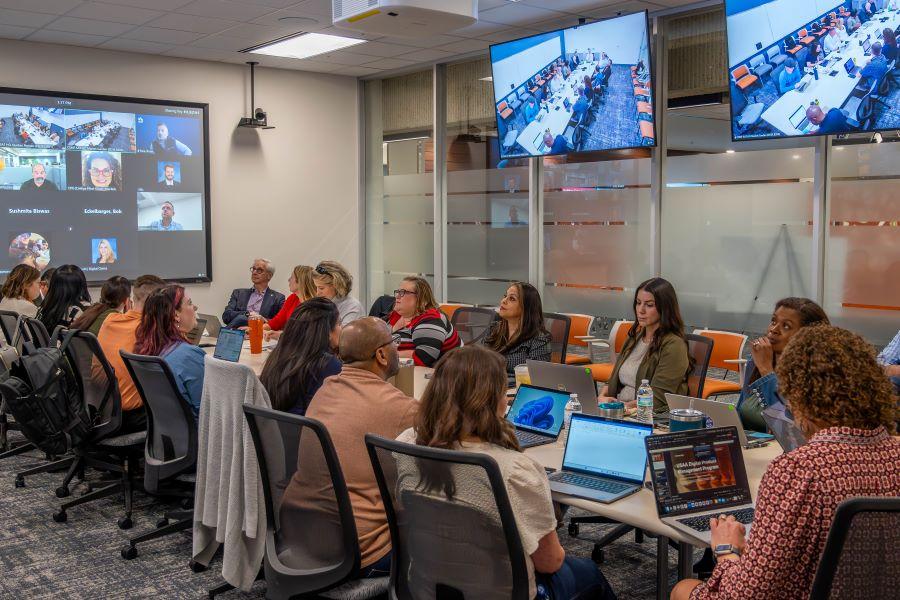
On May 20, Extended Campus Custom Training hosted an Open House, showcasing how UT Austin's faculty experts translate cutting-edge research into practical solutions for today's most pressing organizational challenges. The event brought together business leaders, learning and development professionals, and organizational decision-makers to experience firsthand the kind of transformative thinking that has made ECCT partnerships so impactful.
Three of our esteemed faculty presented their innovative perspectives on seemingly familiar workplace topics, demonstrating exactly why organizations turn to ECCT when conventional training approaches fall short.
What’s Killing Your Creativity?
Chris Aarons delivered perhaps the most provocative session of the day, challenging one of business's most sacred assumptions: that efficiency drives success. In "The Hidden Innovation Killer Lurking In Your Organization," Aarons argued that the very structures designed to improve efficiency are systematically strangling innovation in most organizations.
"Efficiency gets you what you asked for. Creativity gives you what you never knew you needed," Aarons explained, highlighting a fundamental tension that most leaders haven't fully grasped. His presentation revealed that while 83% of executives believe their organizations encourage curiosity, only 32% of employees agree, a perception gap that costs organizations millions in lost opportunities.
Drawing on research from companies across industries, Aarons demonstrated how organizations embracing curiosity and creativity save millions annually, while those trapped in efficiency-driven metrics miss breakthrough innovations. He introduced the concept of "structured inefficiency," showing how companies like LEGO transformed near-bankruptcy by abandoning efficiency-focused management and returning to creative, playful development approaches.
His key insight about organizational measurement was particularly powerful: "What gets measured gets managed, but what gets managed isn't always what matters." Aarons emphasized the critical importance of protecting uninterrupted thinking time and developing strategies for measuring exploration alongside execution. Attendees left with concrete ideas and probing questions for identifying and nurturing their organization's hidden creative potential.
Why Your Best Ideas Need More Time to Play
Art Markman took on another workplace staple with "The Essence of Effective Thinking," but his approach diverged significantly from typical creativity workshops. While Aarons examined creativity through a strategic and marketing lens, Markman brought a psychological perspective to the same fundamental challenge: how organizations can foster breakthrough thinking.
Markman's presentation complemented Aarons' insights by exploring the essential and functional role of free time and play time in effective thinking. Like Aarons, he emphasized the critical importance of experimentation, unstructured time, and exploration, but through the lens of cognitive psychology rather than organizational strategy.
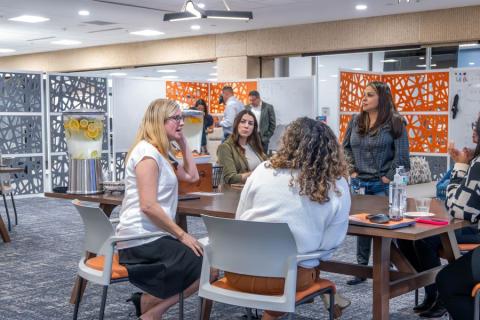
His central premise challenged common assumptions about innovation: that breakthrough thinking requires more creative techniques. Instead, Markman demonstrated that knowledge, combined with the psychological space for that knowledge to connect in new ways, is what most organizations overlook when trying to improve problem-solving capabilities.
Markman's session was particularly valuable for its practical focus on building organizational problem-solving capacity. Rather than offering quick fixes, he provided frameworks for developing teams that can consistently tackle complex challenges by leveraging both their existing knowledge base and their capacity to acquire new insights through unstructured exploration.
Your Generational 'Problem' Is Actually Your Secret Weapon
Elizabeth Richmond-Garza addressed one of today's most pressing workplace realities with "From Silent to Z: Optimizing Generational Differences in Today's Workplace." Rather than treating generational diversity as a management challenge to overcome, Richmond-Garza reframed it as an untapped competitive advantage.
Her presentation stood out for its nuanced approach to a topic often oversimplified in corporate training (and in personal conversations and venting sessions!). Instead of relying on generational stereotypes, Richmond-Garza introduced the concept of intersectionality in organizational settings, helping attendees understand how multiple identities, including but not limited to generational membership, shape workplace experiences.
What made Richmond-Garza's approach particularly powerful was her emphasis on reframing what's often discussed as inherently negative. Rather than viewing generational differences as obstacles to manage, she demonstrated how the varying strengths that each generation brings to today's workplace can become a strategic complementary advantage when approached thoughtfully.
Through the use of Venn diagrams highlighting our multiple and overlapping identities, Richmond-Garza visually guided participants through an exploration of personal and organizational intersectionality, demonstrating how individual complexity intersects with organizational culture. This approach helped attendees move beyond surface-level generational differences to understand deeper patterns of workplace interaction.
Richmond-Garza's practical strategies for leveraging each generation's strengths were particularly well-received. Rather than managing around generational differences, she showed how to optimize them:
- Silent Generation: Leverage experience and institutional knowledge while respecting their preference for face-to-face communication
- Baby Boomers: Harness their problem-solving skills and interpersonal capabilities while valuing their experience
- Generation X: Utilize their emotional self-awareness and organizational knowledge while empowering their independent work style
- Millennials: Embrace their leadership potential and digital fluency while leveraging their collaborative and civic-minded approach
- Generation Z: Support their entrepreneurial spirit and quick learning while providing the transparency and community focus they value
Her presentation culminated in demonstrating how emotional intelligence serves as the bridge that enables all generations to collaborate more effectively, turning potential friction points into opportunities for enhanced teamwork and innovation.
Richmond-Garza acknowledged that this work can be challenging and sometimes difficult, but emphasized that with patience and a willingness to extend grace for well-meaning mistakes, organizations and teams can thrive in a multi-generational setting.
The TEXAS Advantage in Action
These presentations exemplify what makes our approach distinctive: the ability to take familiar workplace challenges and reveal entirely new possibilities through research and practical application.
The enthusiastic response from participants reinforced why organizations increasingly seek alternatives to conventional training approaches. When faced with complex challenges that off-the-shelf solutions can't address, the combination of academic rigor and practical insight that our faculty members represent becomes invaluable.
For organizations seeking this level of transformative thinking for their teams, these presentations offered a compelling preview of how custom training partnerships with ECCT can unlock new possibilities for addressing even the most entrenched workplace challenges.
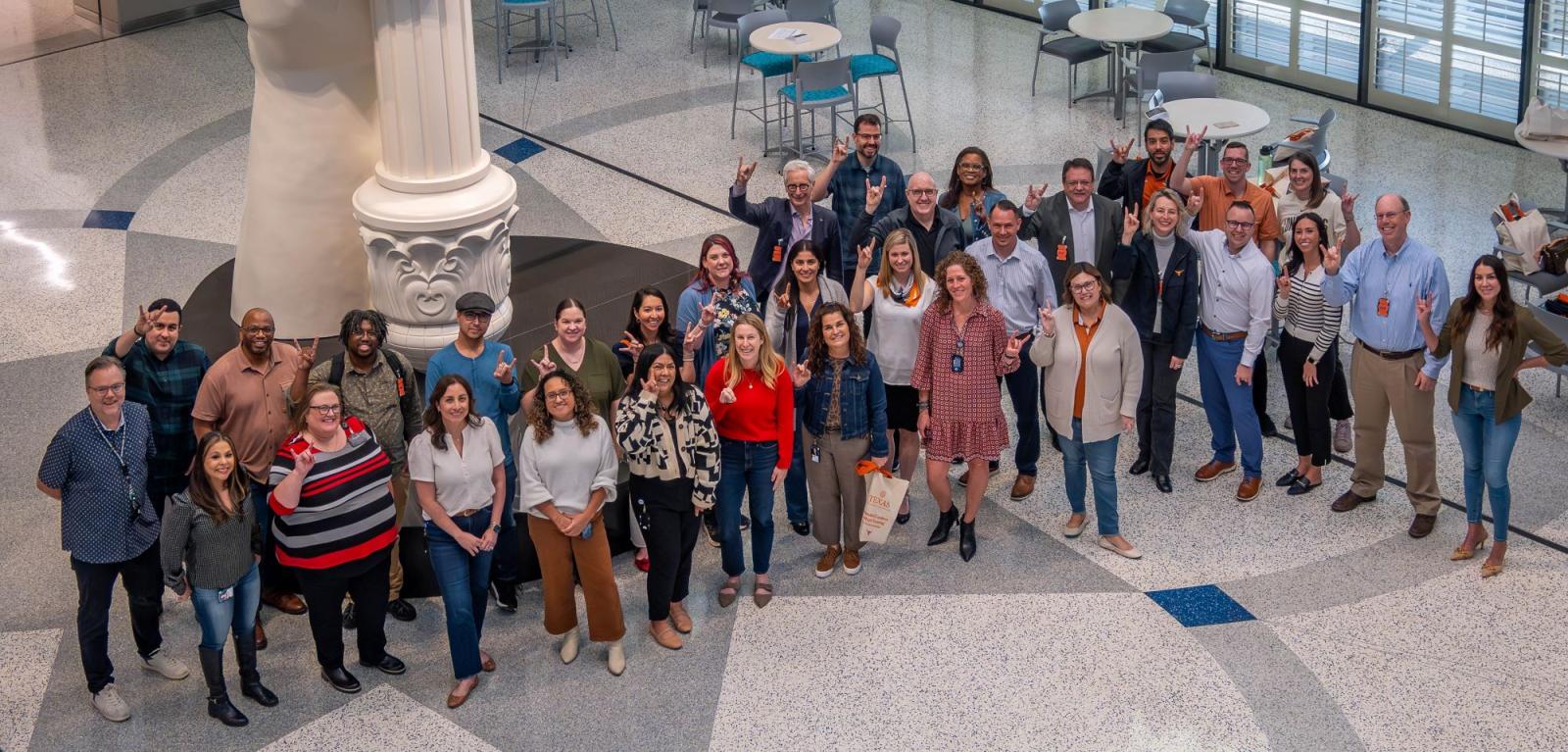
Extended Campus Custom Training collaborates with organizations to co-create customized learning experiences that address unique challenges. To explore how our faculty experts can help transform your organization's approach to innovation, problem-solving, and team dynamics, contact us at ecct@austin.utexas.edu.