


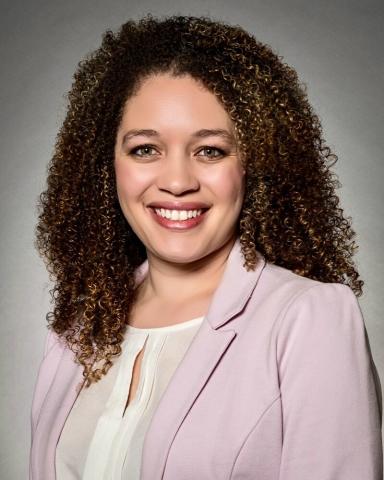
Meet Brittany Posadas
“The job outlook for paralegals is fantastic,” says Brittany Posadas, paralegal program manager and instructor for the Paralegal Certificate Program at The University of Texas at Austin. She sees hundreds of paralegal students enrolling each year in popular programs offered through UT’s Center for Professional Education (CPE).
The facts confirm her optimism. The need for paralegals in Texas is steadily climbing, with 2.5% short-term employment growth projected in reports sponsored by the U.S. Department of Labor.
“It is definitely a growing, growing field. Attorneys will always need paralegals,” she says.
In-Person or Online
To prepare students as paralegals (also called legal assistants), CPE offers both a live, instructor-led program and a self-paced online version of the training.
Taught three times a year, the instructor-led course lasts 5.5 months. Classes are capped at 40 individuals.
Students who need more time or a flexible schedule may choose the online, self-paced course to complete in 12 months. This rolling enrollment option can start any day the student chooses. Posadas says there are usually 150-200 students enrolled at any given time.
Fees for either program are the same, with scholarships and discounts available.
Both options cover the same topics, with rigorous assignments using cases modeled on real-world issues and access to professional legal research platforms such as Westlaw and Lexis.
“You should be able to graduate from either program and walk into an entry-level position with some really good working knowledge. Both programs are very hands on,” Posadas says. “You are going to be touching and doing real legal work in this course for sure.”
What and How You Will Learn
Four core classes are required to complete the certificate program:
- Essential Skills
- Civil Procedure
- Torts
- Contracts
For example, Posadas teaches the six-week essential skills class, which includes 11 homework assignments based on fact patterns modeled after hypothetical cases. The self-paced module is very similar and includes the same homework load.
“It’s all hands-on and they work from start to finish drafting legal documents such as notices of deposition, motions, petitions, summaries and other research,” she explains.
“The work is the real deal. It’s a lot, but I’ve had students come back and say, ‘You weren’t kidding!’ when they get hired.”
Learning is intense, but Posadas and other future employers are confident in the skills that graduates of the program bring. “I’ve often hired students [at the firm where she works] and tell them to help draft such and such. I know they have the knowledge, and they do, too!”
Texas Focus
Future Texas employers also appreciate that the programs are based on Texas law, Posadas explains.
“I stand behind this 100%. Everything that you're learning in this program is rooted in Texas law. Employers know that when students finish this program, they have a deep understanding of Texas law, very specific to Texas and Texas litigation,” she explains.
“They're not just getting broad topics, they are going deep into civil procedure for Texas, which is beneficial.”
Career Help Included in Instructor-Led Class
A valuable bonus for students enrolled in the instructor-led course is an opportunity to add (at no extra cost) the career series. This optional class is taught by an Austin recruiter who was previously a paralegal.
“She gives tips and tricks on developing your career as a paralegal, developing your resume, how to utilize and leverage LinkedIn,” Posadas says, recommending the class. “This is an invaluable experience. As a recruiter, she has a really unique perspective and advice about the market.”
Who Enrolls?
Posadas, who has taught at UT since 2019, has encountered students from every walk of life. Some may enter right out of high school with the required diploma or equivalency. She has also seen students who have been attorneys or judges in other countries.
However, she says most paralegal students are pursuing their second career, an experience Posadas relates to.
“That was my journey as well. My first career was in finance and banking. I'm uniquely familiar with what it's like to change careers when you decide to take a different path.”
Student Success
“Successful CPE paralegal students tend to be organized and curious. They want to know more, and they speak up when something doesn’t make sense,” Posadas says, adding, “Students who like to think deeply about something and like to question what's going on or question a situation—those students tend to be very successful.”
“Paralegals in general, I think, are very intuitive and inquisitive people,” she says. “They aren’t reluctant to raise a red flag or to dig deep. There is a lot of investigation and factual research. They have to be OK going down that rabbit hole.”
Specialty Topics, Too
In-depth specialty certificate options in more than 20 areas ranging from Family and Elder Law to Sports and Media are also available for career development through CPE.
An AI-focused class is being vetted now. Stay tuned for more announcements.
Learn More about UT's Paralegal Programs
Attend an information session to hear more about paralegal programs at UT.